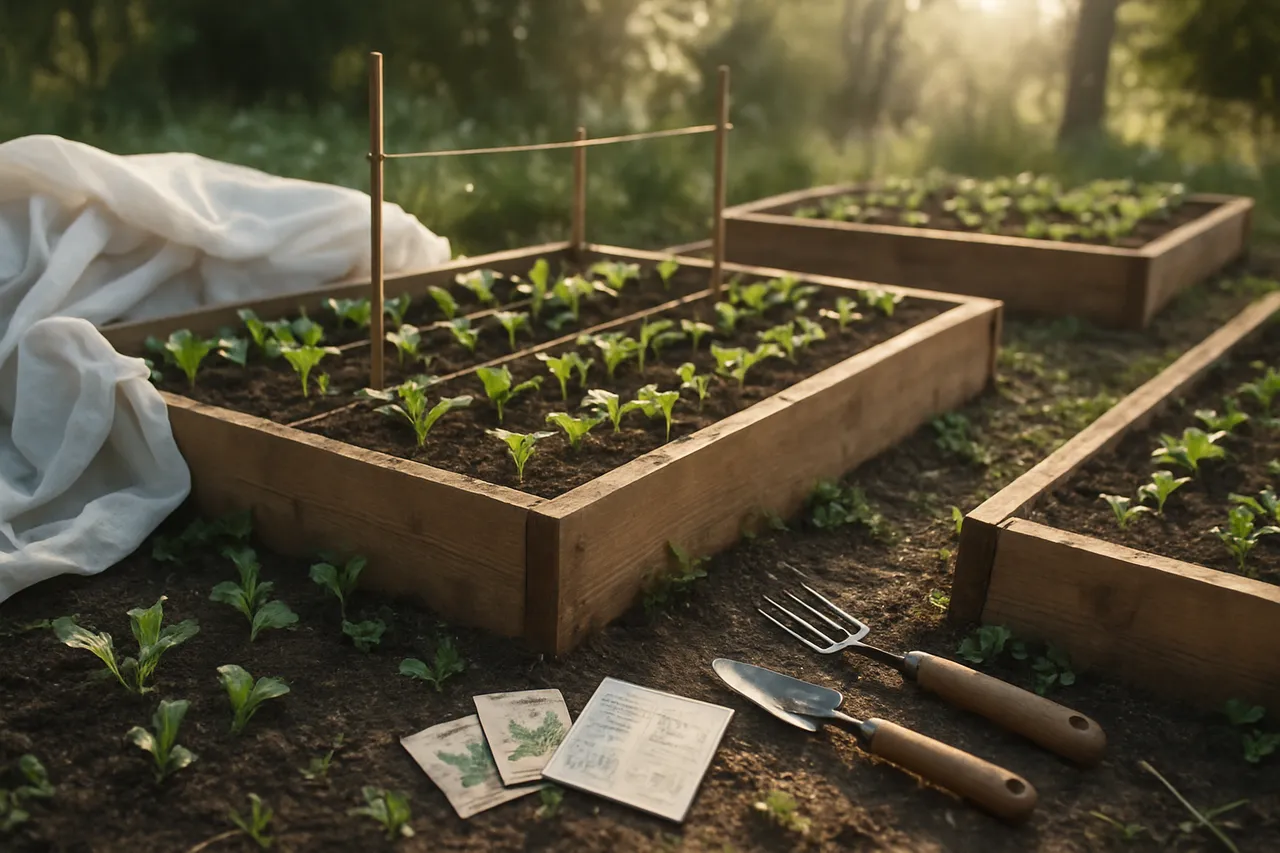
Vegetable Gardening at Altitude
Honestly, most first-timers here plant on Mother's Day like a neighbor told them to, and then a cold night in late May flattens everything. I did exactly that my first spring. This class is for anyone starting their first backyard vegetable plot in Utah County, at around 4,600 feet, where the season is super short and the nights are the real enemy.
We meet Saturdays, 9 to 11, and my hands will be in the dirt more than they'll be on a slideshow. You'll leave with a planting plan you'll actually follow, a sense of when to plant here (not what the seed packet says), and a few ways to keep your plants alive through a clear cold night. - D
What you'll learn
- Track real frost dates with a min/max thermometer
- Build and fill a raised bed correctly
- Test soil pH and manage alkaline conditions
- Time transplants and direct-sows for a short season
- Diagnose common pests and know when to get help
Materials & tools
What to bring
- Work gloves (nitrile-coated or leather) — $5-12
- Hand trowel, stainless or coated steel — $6-15
- A few started transplants (tomato, pepper) or seed packets of cool-season crops (lettuce, spinach, peas, carrots) — $2-5 per packet, $3-6 per transplant
- Notebook and pencil for your planting calendar and frost notes — $2-5
- Cloth or reusable frost cover / floating row cover (about 1.5 oz weight, a few yards) — $10-20
- 5-gallon bucket or tote to carry tools and soil samples — $4-8
Nice to have
- Soil thermometer (to check that soil has reached 50-60°F before planting warm crops) — $8-15
- Min/max thermometer to track your yard's overnight lows — $12-20
- Compost or aged steer manure, a bag or two, to amend heavy clay soil — $4-8 per bag
- Mulch (straw or shredded bark), one bag to start — $4-7
- Wall-of-water or cloche season-extender for tomatoes — $3-6 each
- Kneeling pad — $8-15
Lessons
- Sizing up your yard before you plant anything
Reading your sun, your season, and our tricky high-altitude climate honestly before a single seed goes in.
- Building the raised beds
Why raised beds win up here and what to actually fill them with.
- Working with our soil and hard water
Handling alkaline soil, that white crust, and testing pH without overthinking it.
- Deciding what to grow
Picking cool- and warm-season crops, buying transplants over seed, and spacing the beds without guessing.
- Getting plants and seeds in the ground
Timing your tomatoes, direct-sowing without rotting seed, hardening off, and setting up trellises.
- Keeping things alive through summer
Watering deep, protecting from frost with cold frames and row cover, and getting through hot dry afternoons.
- Pests, harvest, and looking ahead
Dealing with aphids and squash bugs, harvesting at the right time, and planning for next spring.
Key terms
- Frost date
- The average date of the last spring frost (and first fall frost) for your area, used to decide when it is safe to set out tender plants.
- Hardening off
- Gradually exposing indoor-grown or store-bought transplants to outdoor sun, wind, and cool nights over about a week so they don't get shocked when planted.
- Cool-season crop
- A vegetable like lettuce, spinach, peas, or carrots that tolerates light frost and grows best in the cooler parts of spring and fall.
- Warm-season crop
- A frost-sensitive vegetable like tomato, pepper, or squash that needs warm soil and air and will be killed by a freeze.
- Growing season
- The number of frost-free days between the last spring frost and the first fall frost, which is short at high elevation in Utah County.
- Row cover
- A lightweight fabric laid over plants to trap a few degrees of warmth and protect them from a cold clear night.
- Season extender
- Any device—cold frame, cloche, wall-of-water, or low tunnel—that adds warmth so you can plant earlier in spring or keep harvesting later into fall.
- Soil amendment
- Material such as compost or aged manure worked into the ground to improve the structure and fertility of the heavy clay common in Utah County yards.
- Days to maturity
- The approximate number of days a variety needs from planting to harvest, printed on the seed packet and important to check against a short season.
- Microclimate
- A small pocket of your yard—next to a south wall, in a low spot that collects cold air—that is warmer or colder than the surrounding area and affects where you plant.
Class discussion
- Pinned ·Welcome! Class starts May 9 - come say hiDebbie Bean · Instructor · 11 replies
- Where do you all get row cover fabric around hereJason Hudson · 2 replies
- my saturdays feel so empty now lol but heres a garden updateMelanie Beeson · 6 replies
More home & garden classes
Basic Home Repair for New Homeowners
with Bryan
Cold Frames & Row Covers: Growing Past the Frost
with Debbie
Drought Tolerant Plant Selection
with Diane