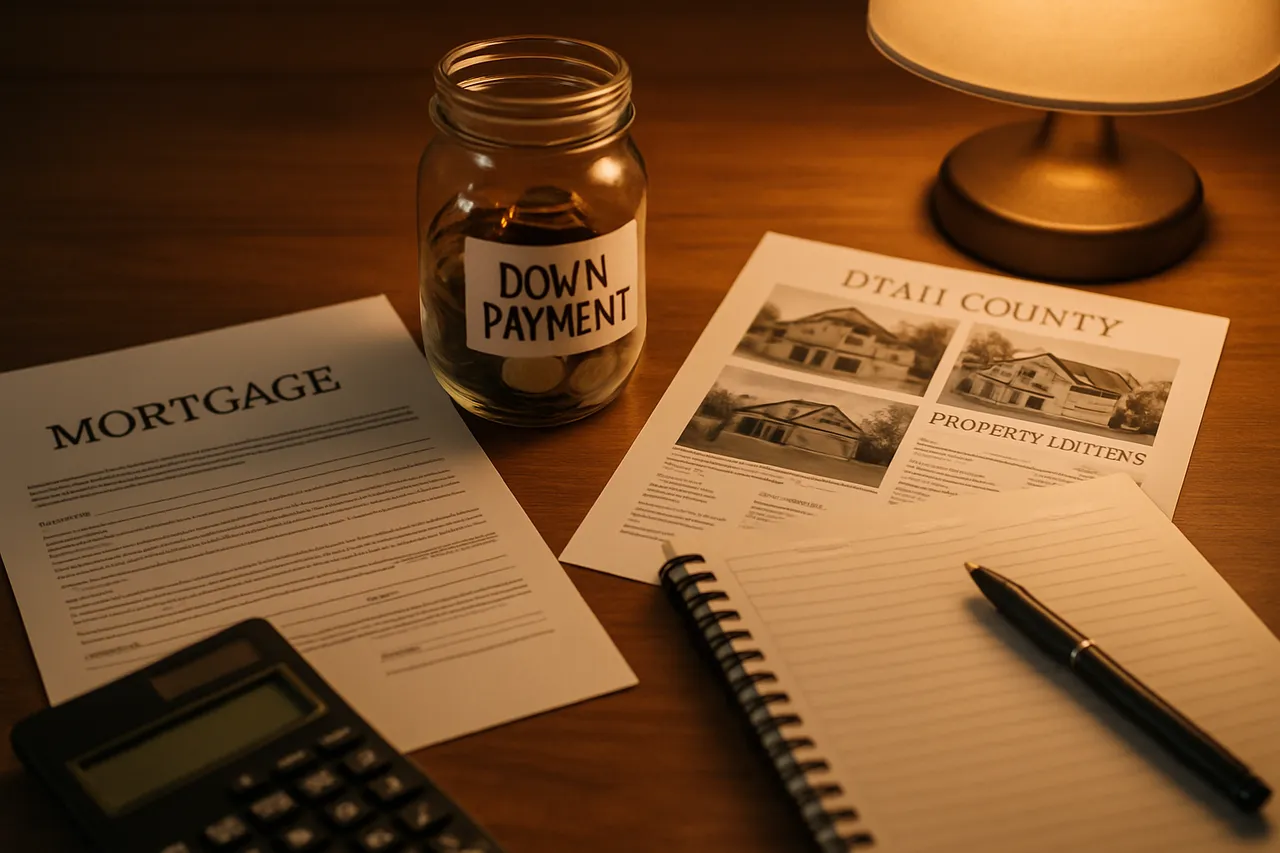
First-Time Home Buying in Utah County
This is for renters in Utah County who keep meaning to buy but don't have a plan yet. We start before the lender, not after, because the folks who walk in prepared get treated better and pay less. Over six Wednesday nights we'll go step by step, saving for a down payment, building a reserve you don't touch, reading a loan estimate line by line, shopping three lenders on the same day, making an offer, and getting through inspection and closing without waiving the things you shouldn't waive. I bring real numbers off actual American Fork and Lehi listings, plus the spreadsheet my wife teases me about. You'll leave with a folder and a plan. That's the whole point.
What you'll learn
- Calculate a home budget you can actually afford
- Explain why preparation lowers your purchase price
- Build a reserve fund into your down payment plan
- Compare renting versus buying costs accurately
- Identify common home buying myths and misconceptions
Materials & tools
What to bring - A binder or accordion folder with dividers to organize documents by stage — $8-15 - A basic calculator (or your phone's calculator app) for down-payment and monthly-payment math — free-$10 - Your two most recent pay stubs and last year's W-2s or tax returns — for building a budget with your own numbers - Two to three months of recent bank and credit-card statements — to see actual spending and savings capacity - A free copy of your credit report from AnnualCreditReport.com, printed or on a laptop — bring it so we can read it together - A notebook and pens for notes and questions between sessions — $5-10 - A laptop or tablet (optional but helpful) for a savings/affordability spreadsheet and comparing online loan estimates
Nice to have - A printed sample Loan Estimate form (free from the CFPB site) to mark up during the loan-shopping session - A highlighter or two for flagging fees and dates on estimates and disclosures — $2-4 - A rough list of monthly debts (car, student loans, minimum credit-card payments) to calculate your debt-to-income ratio - A USB drive or a cloud folder to keep digital copies of everything you collect — $6-12
Lessons
- Saving up and the down payment
Getting your budget honest and building the down payment and reserves before you shop.
- Why the prepared buyer pays less15 min
- Reading your actual budget, not the one you wish you had20 min
- The reserve fund is part of the down payment18 min
- Renting isn't throwing money away, and other myths15 min
- The 20 percent rule and why I argue with it22 min
- PMI, what it costs, and running the math both ways20 min
- Down payment help programs in Utah, what's real18 min
- Building a savings timeline that survives rent going up15 min
- Getting approved without overreaching
How approval, underwriting, and loan types work, and why to buy less house than they'll allow.
- Shopping the loan and its real costs
Reading rates, loan estimates, and fees so you can compare lenders side by side.
- Reading the market and picking a house
Watching the American Fork and Lehi market and choosing a sensible first home.
- Making the offer through closing day
Writing an offer, handling inspection and repairs, and getting to the closing table.
Key terms
- Down payment
- The portion of the home's price you pay up front out of your own funds, with the rest covered by your mortgage loan.
- Pre-approval
- A lender's written estimate of how much it is willing to lend you, based on a review of your income, debts, and credit, which strengthens an offer.
- Loan Estimate
- A standardized three-page form a lender must give you within three business days of application, showing the interest rate, monthly payment, and closing costs so you can compare offers.
- Closing costs
- The fees paid at closing beyond the down payment, such as loan origination, appraisal, title insurance, and recording, typically 2 to 5 percent of the price.
- Earnest money
- A good-faith deposit you put down when making an offer to show the seller you are serious; it is usually applied toward your down payment or closing costs at closing.
- Debt-to-income ratio (DTI)
- The share of your gross monthly income that goes to debt payments, which lenders use to decide how much you can borrow.
- Private mortgage insurance (PMI)
- An extra monthly charge lenders require on most conventional loans when your down payment is less than 20 percent, protecting the lender if you default.
- Escrow
- A neutral third-party account that holds funds during a transaction, and later an account that collects part of your payment to pay property taxes and homeowners insurance.
- Home inspection
- A professional walkthrough of the home's condition, ordered after an accepted offer, that can reveal problems and give you room to negotiate or walk away.
- Appraisal
- A lender-ordered, independent estimate of the home's market value used to confirm the property is worth the amount being borrowed.
Class discussion
- Pinned ·Welcome — class starts May 6, let's get acquaintedJonathan Polk · Instructor · 10 replies
- down payment savings - where do you even keep it?Kenneth Welch · 6 replies
More money & career classes
Family Budgeting Basics
with Joyce

Managing Debt and Building Credit
with Devin

Retirement Basics for Beginners
with Jennifer