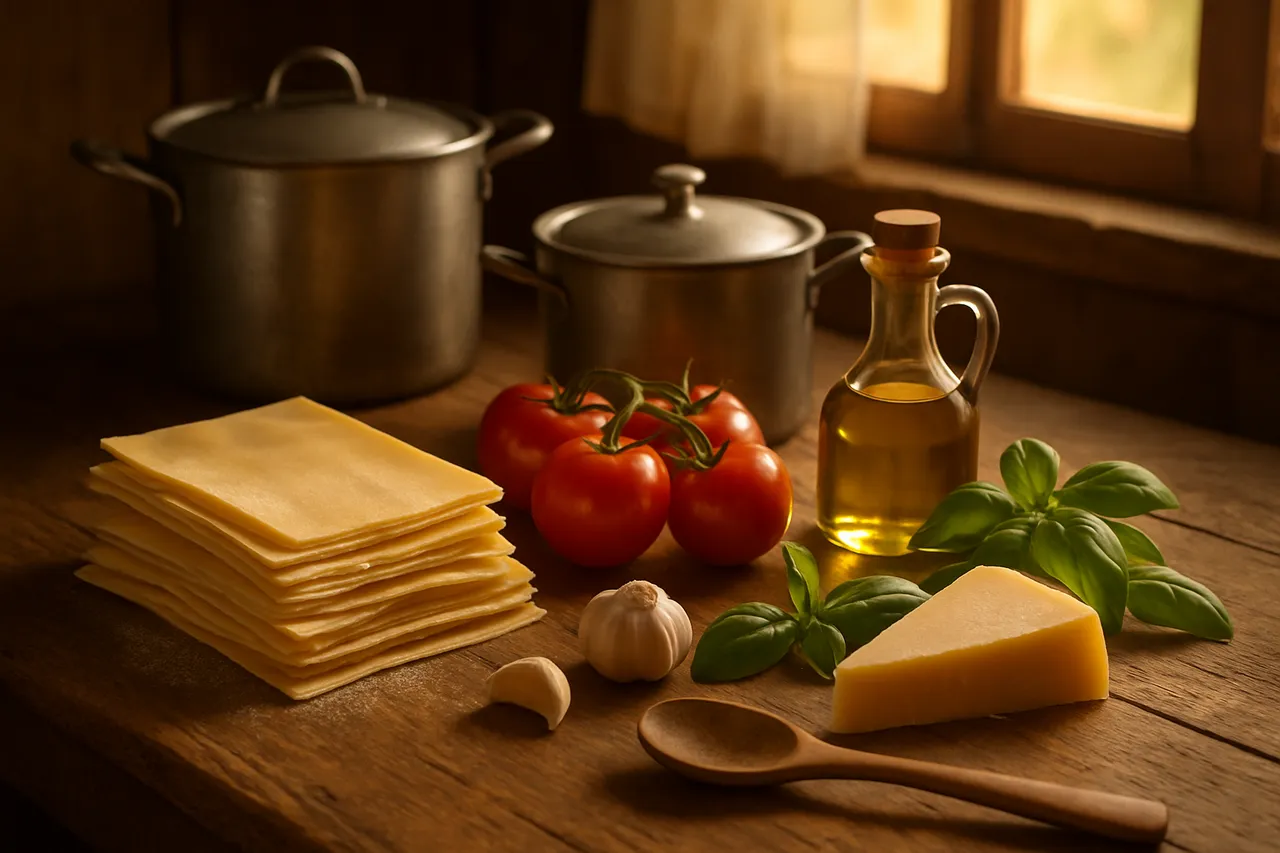
Weeknight Italian Cooking
This class is for busy people who want real dinners on a weeknight without buying a bunch of gear or learning to be a chef. I'm not a chef. I'm a guy who feeds his family after 6 and figured out a handful of things that actually work.
We'll cook every week, hands-on, from stuff you can grab at any regular store. You'll make a simple pasta, a quick tomato sauce with about five ingredients, and a cheap green salad with a shaken dressing that makes the plate feel like a real meal.
You'll leave with three or four dinners you'll actually make again. That's the whole point. Wednesdays, 6 to 8.
~devin
What you'll learn
- Cook pasta perfectly adjusted for high elevation
- Build a sauce from scratch while tasting constantly
- Fix an overly salty, thin, or flat sauce
- Time pasta and sauce to finish together
- Assemble a full 30-minute weeknight dinner
Materials & tools
What to bring
- Large pot for boiling pasta, at least 6-8 quart — $20-40 (any stockpot works)
- Large skillet or sauté pan, 10-12 inch, with a lid — $25-50
- Chef's knife, 8 inch, and a paring knife — $15-40 for a decent starter knife
- Cutting board, large enough for an onion and a few tomatoes — $10-20
- Colander for draining pasta — $8-15
- Wooden spoon and a pair of tongs — $5-12
- Box grater or a Microplane for hard cheese — $10-20
- Measuring cups and spoons — $8-15
- A few storage containers for leftovers and dressing — $8-15
- Apron and a couple of kitchen towels — $10-20
Nice to have
- Garlic press — $8-15
- Instant-read thermometer — $12-20
- Salad spinner for washing and drying greens — $15-30
- Fine-mesh sieve for reserving pasta water cleanly — $10-15
Lessons
- Your kitchen and your stove
Sorting out the few tools you actually need and learning the quirks of the stove you already cook on.
- Pasta and salt, the two basics
Why boxed dried pasta is genuinely great and how salting in stages builds flavor from the start.
- Building a sauce from scratch
Starting the sauce first, handling garlic, tasting your way there, and fixing one that's too salty, thin, or flat.
- Cooking the pasta right
Salting the water, adjusting box times for our elevation, timing pasta to the sauce, and finishing it in the pan.
- A salad on the side
A jar dressing, the oil-to-vinegar ratio, drying your greens, and add-ins from any store aisle.
- Timing the whole dinner
The order of operations for a 30-minute meal and cooking two things at once without panic.
- Finishing the plate
Bulking the dish up with beans or chicken and plating it so it looks like a real meal.
- Variations and where to go next
Swapping pasta shapes, convenience shortcuts, cooking for a crowd, and picking the keepers you'll make again.
Key terms
- Al dente
- Pasta cooked until firm to the bite rather than soft, usually a minute or two less than the package time.
- Pasta water
- The starchy, salted water left after boiling pasta, saved by the cup to loosen and bind a sauce.
- Soffritto
- A gently cooked base of finely chopped onion, carrot, and celery that flavors many Italian sauces.
- Emulsify
- To combine fat and liquid, such as olive oil and vinegar or oil and pasta water, into a smooth, unified mixture.
- Mise en place
- Having all ingredients measured, chopped, and ready before you start cooking so the actual cooking goes fast.
- Vinaigrette
- A simple salad dressing of oil and an acid like vinegar or lemon juice, seasoned with salt and often mustard.
- Extra-virgin olive oil
- The least processed grade of olive oil, used for finishing dishes and dressings where its flavor stands out.
- Reduce
- To simmer a sauce so water evaporates, concentrating the flavor and thickening the texture.
- Season to taste
- Adjusting salt, pepper, and acid at the end by tasting and adding a little at a time until it's right.
- Blooming
- Briefly cooking garlic, dried herbs, or tomato paste in warm oil to release their flavor before adding liquid.
Class discussion
- Pinned ·welcome / say hi before May 6Devin Scott · Instructor · 14 replies
- finally got al dente rightAdam · 2 replies
- 6 weeks of italian cooking, doneHyrum Call · 0 replies
More cooking & baking classes
Artisan Pizza Dough and Toppings
with William
Beyond Weeknight Italian: Sauces, Braises, and Fresh Pasta
with Devin
Bulgogi & Beyond: Korean Home Cooking
with Caroline